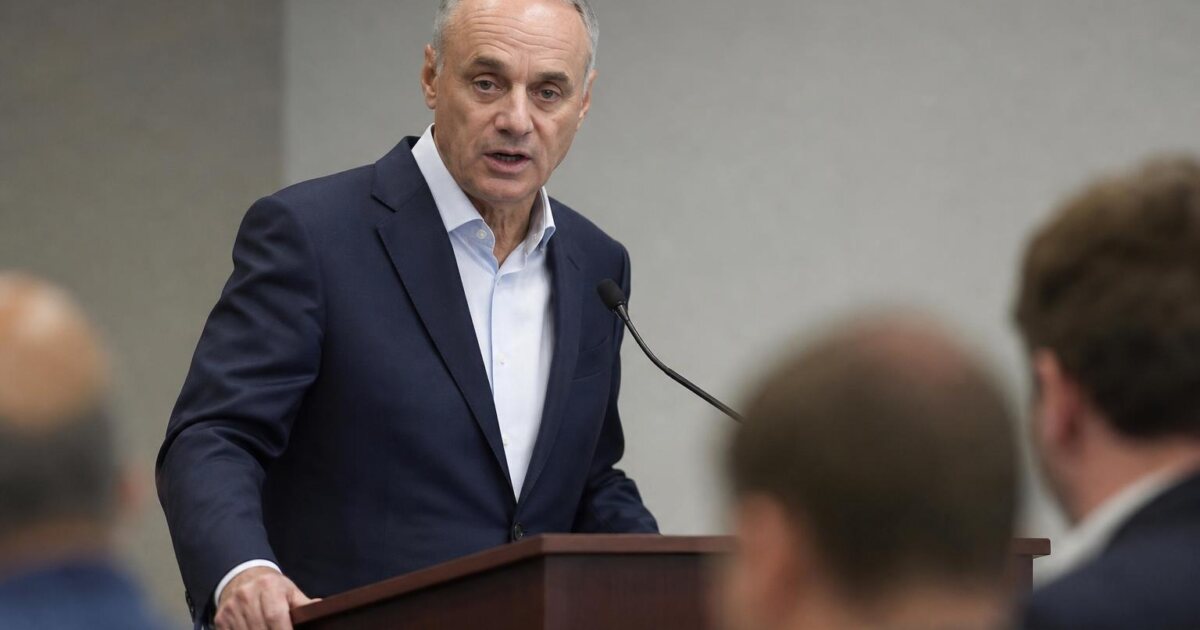
Rob Manfred: MLB Owners Won’t Budge on Salary Cap
Commissioner Rob Manfred says MLB owners will not ratify any deal without a salary cap and floor, putting the sport on course for a lockout starting December 2 that could jeopardize the 2027 season.
MLB is heading for a lockout on December 2, and Commissioner Rob Manfred just made clear the owners have no interest in blinking first.
Speaking at a news conference during an owners’ meeting in New York on Wednesday, Manfred was about as direct as it gets. “The owners want a deal with a salary cap and floor,” he said. “I can’t imagine the owners ratifying a deal that does not include a cap and floor.” That’s not exactly the language of a side looking to split the difference.
NBC Sports reported that MLB has proposed a hard cap of $258.2 million for 2028 and a floor of $180.2 million, calculated using luxury tax payrolls with average annual values. Under the proposal, a team could dip as low as 90 percent of the floor in 2028, which works out to $162.18 million, but would need to hit the full floor amount over a three-year window. Individual contracts would also be capped, and MLB says the plan includes a 50-50 revenue split, though the players’ union disputes how management is defining revenue and expenses.
The MLB Players Association’s position is equally firm: they will never accept a cap. That’s not new. The last time management pushed a cap proposal was 1994, and it triggered a 7 and a half month strike that wiped out the World Series for the first time in 90 years. Neither side is working from a short memory here.
Manfred also took a shot at the union’s approach to negotiations, saying, “What the MLBPA has not done is made any meaningful proposal to move toward us.” The players, predictably, see it differently. Two immovable objects, one deadline, and a 2027 season that could get caught in the middle.
With December 2 now less than two weeks away, baseball is staring down a work stoppage that has been building for months. A prolonged lockout would put spring training, and potentially the regular season itself, at risk. The 1994 strike didn’t end until April of the following year, costing 938 games. Nobody wants a repeat, but right now both sides are acting like they’re willing to find out.